In active development · internal use
The system the company actually runs on
FB Software ERP is the back office we built for ourselves: projects, notes, documents, hosting, communication and credentials in one place instead of five. Built on Odoo 19 Community — an open-source backend we own rather than a platform we rent.
Running on a development instance. Not yet offered as a product.
- Odoo 19 CommunityBackend
- open sourceEdition
- 11Apps installed
- FB SoftwareCustom modules
- developmentEnvironment
- self-managedHosting
Why it exists
The founder was the integration layer
Customers in one tool, projects in another, passwords in a note, hosting details in an email, documents in a folder nobody else could find. Every morning began by opening the same five things and copying between them.
That work is invisible, unpaid and endless, and it falls on whoever runs the company. FB Software ERP exists to take it — and because building it in the open teaches the thing better than talking about it would.
Modules
Eleven apps, built one at a time
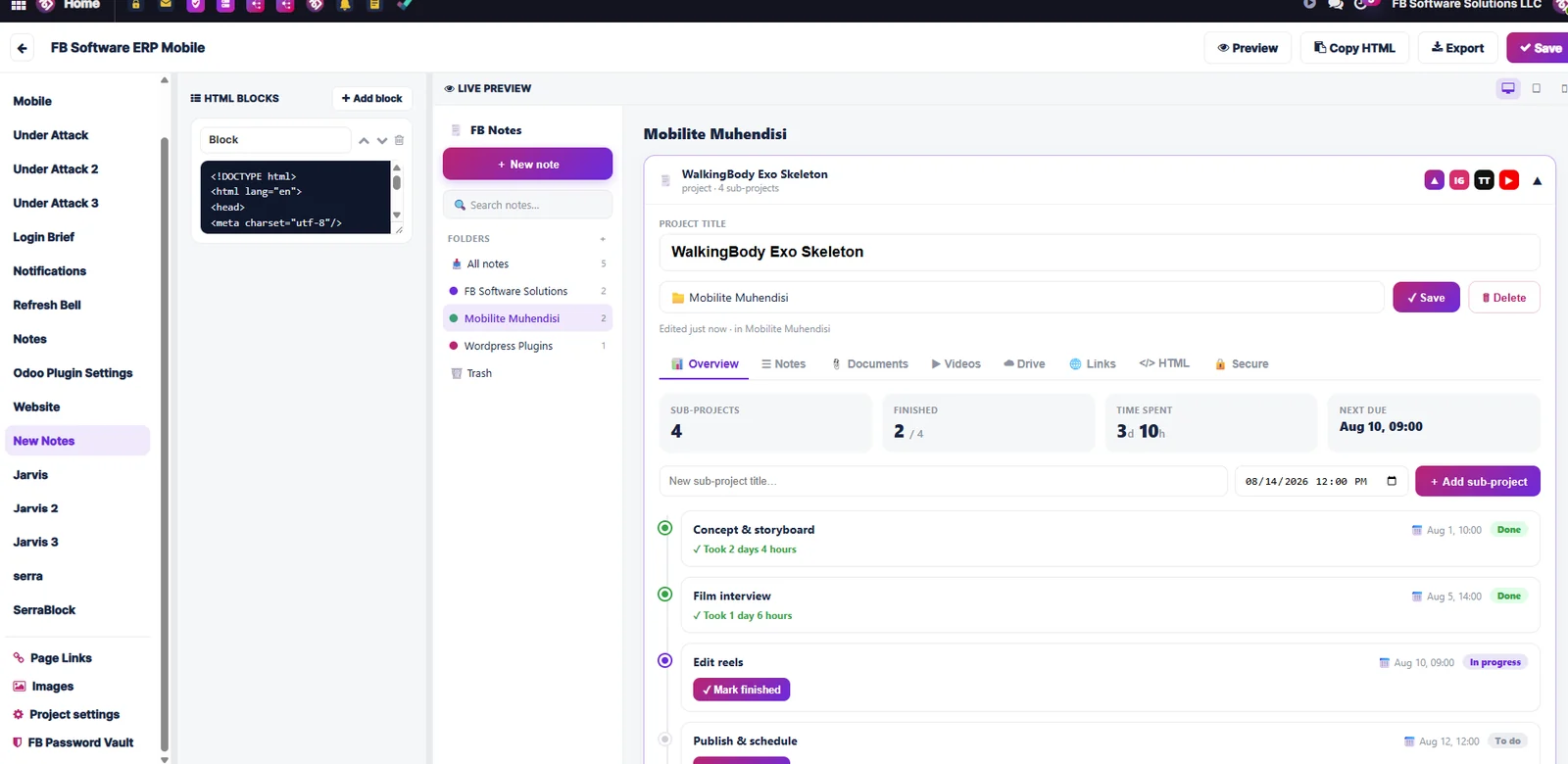
Each one was added because something was genuinely being lost without it. Nothing here is a placeholder — these are screenshots of the running system.
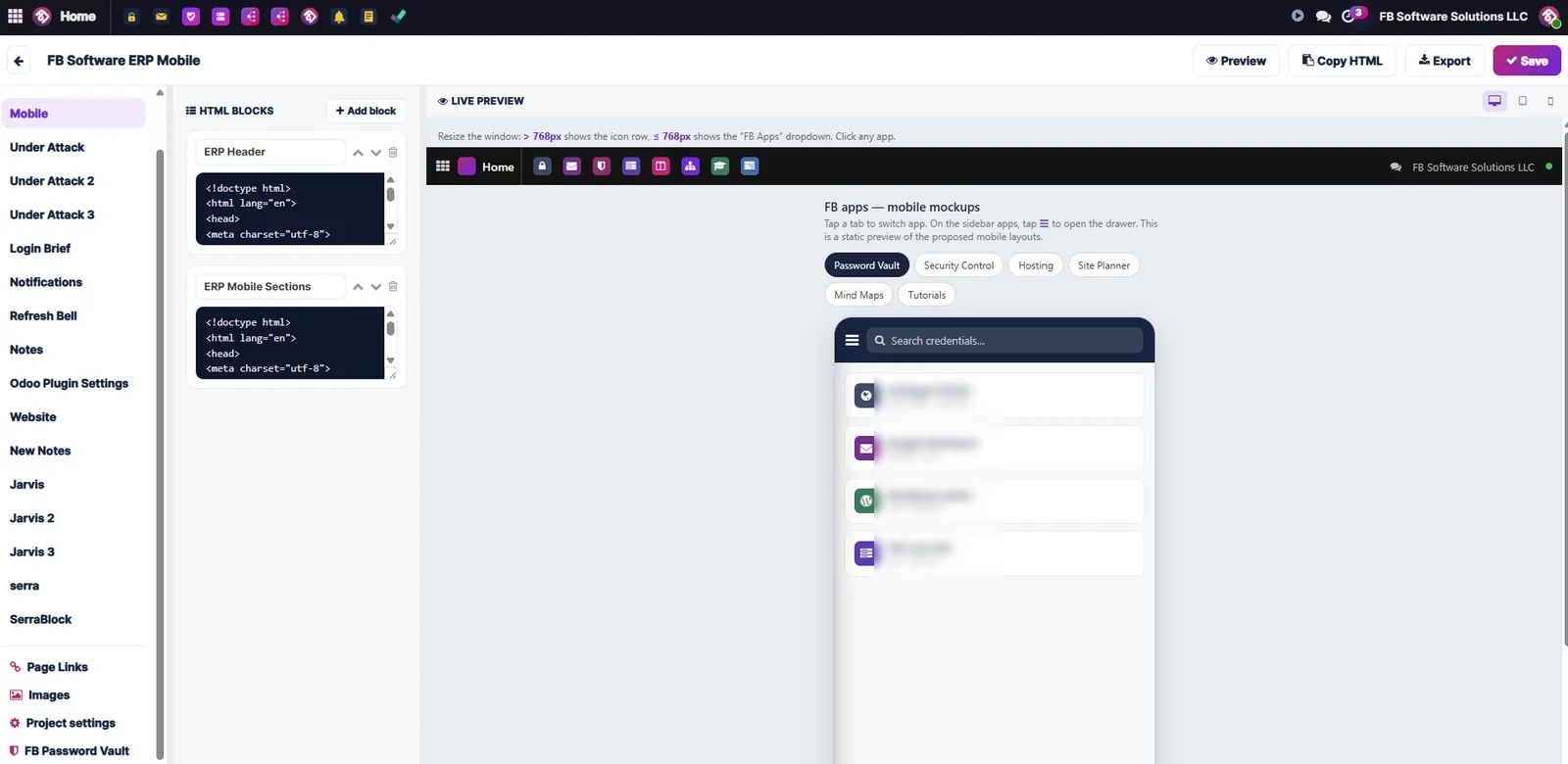
Planning site structure and sections before anything is built in WordPress. Blocks are drafted and reordered on the left while the right pane renders them live — here, the mobile layouts for the FB apps. Account names in the preview are blurred.
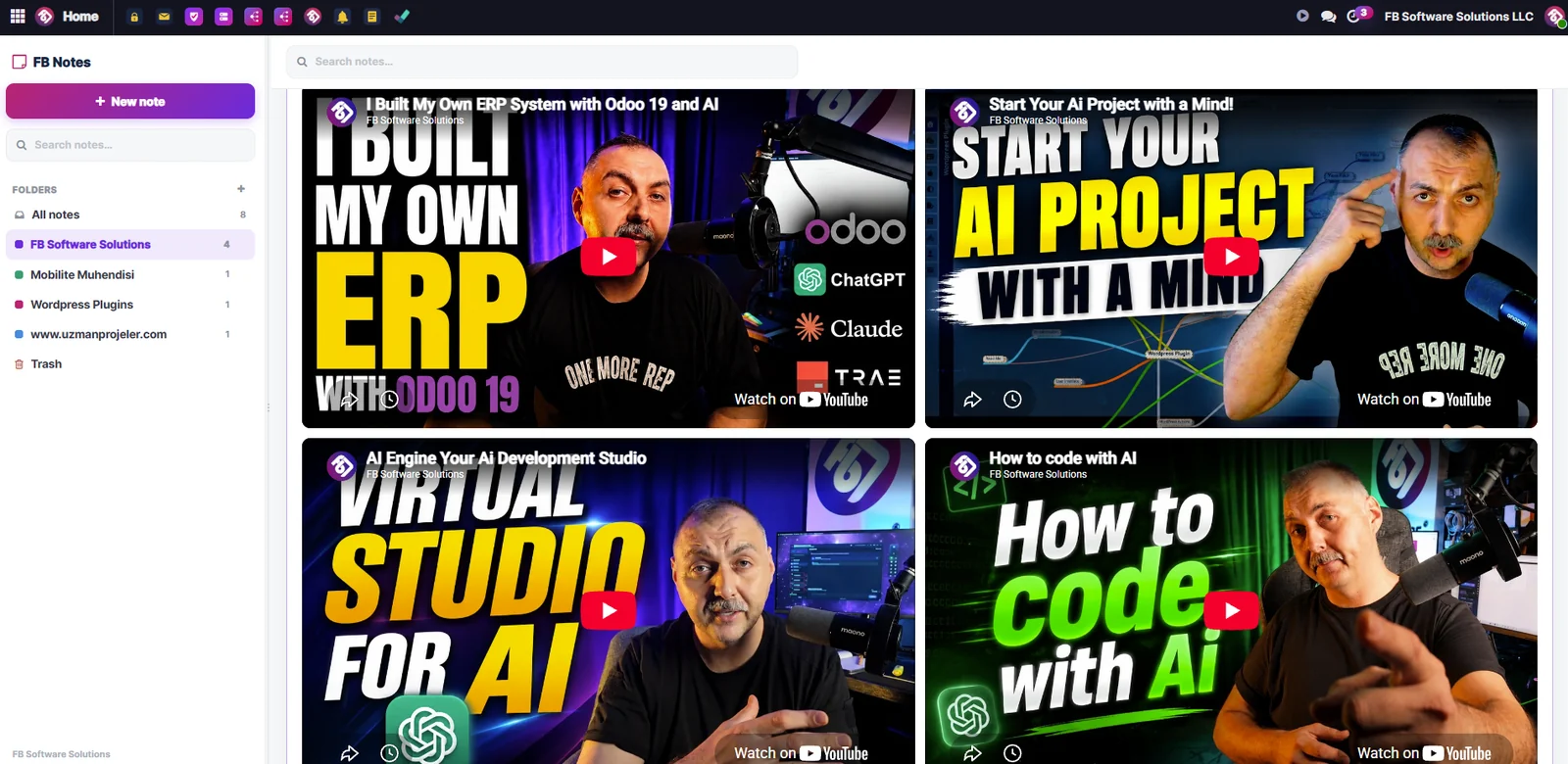
Working notes attached to the project they belong to, rather than scattered across apps. Notes hold whatever the work needs — text, documents, links, and the videos that came out of it.
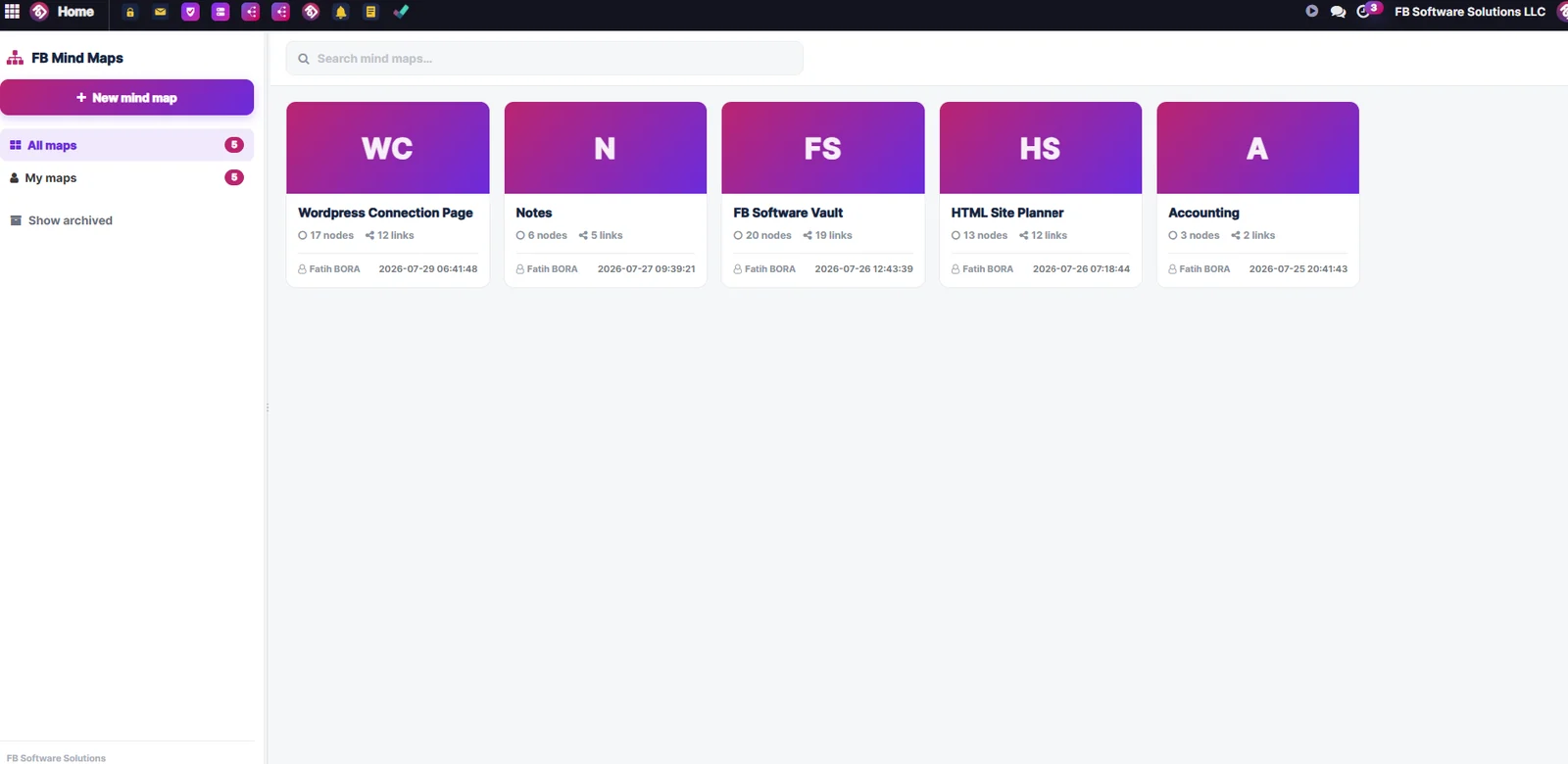
Planning a project before writing any code — the step most tutorials skip. Each map records the node and link count so a plan's growth is visible over time.
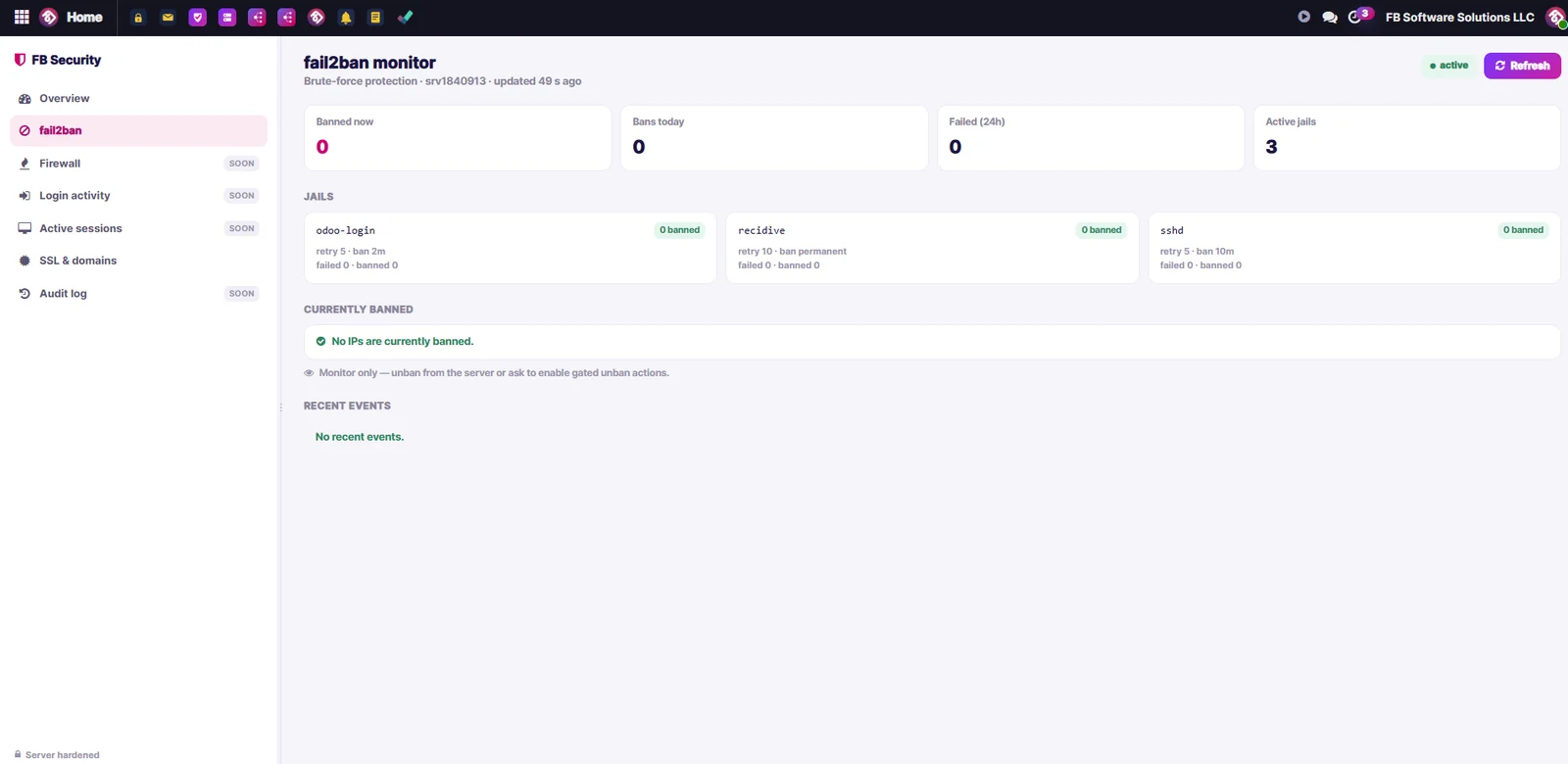
Who can reach what, and a record of the settings that matter. The fail2ban monitor reads the live jails on the server. It is deliberately monitor-only — unbanning happens on the server, not from a web page.
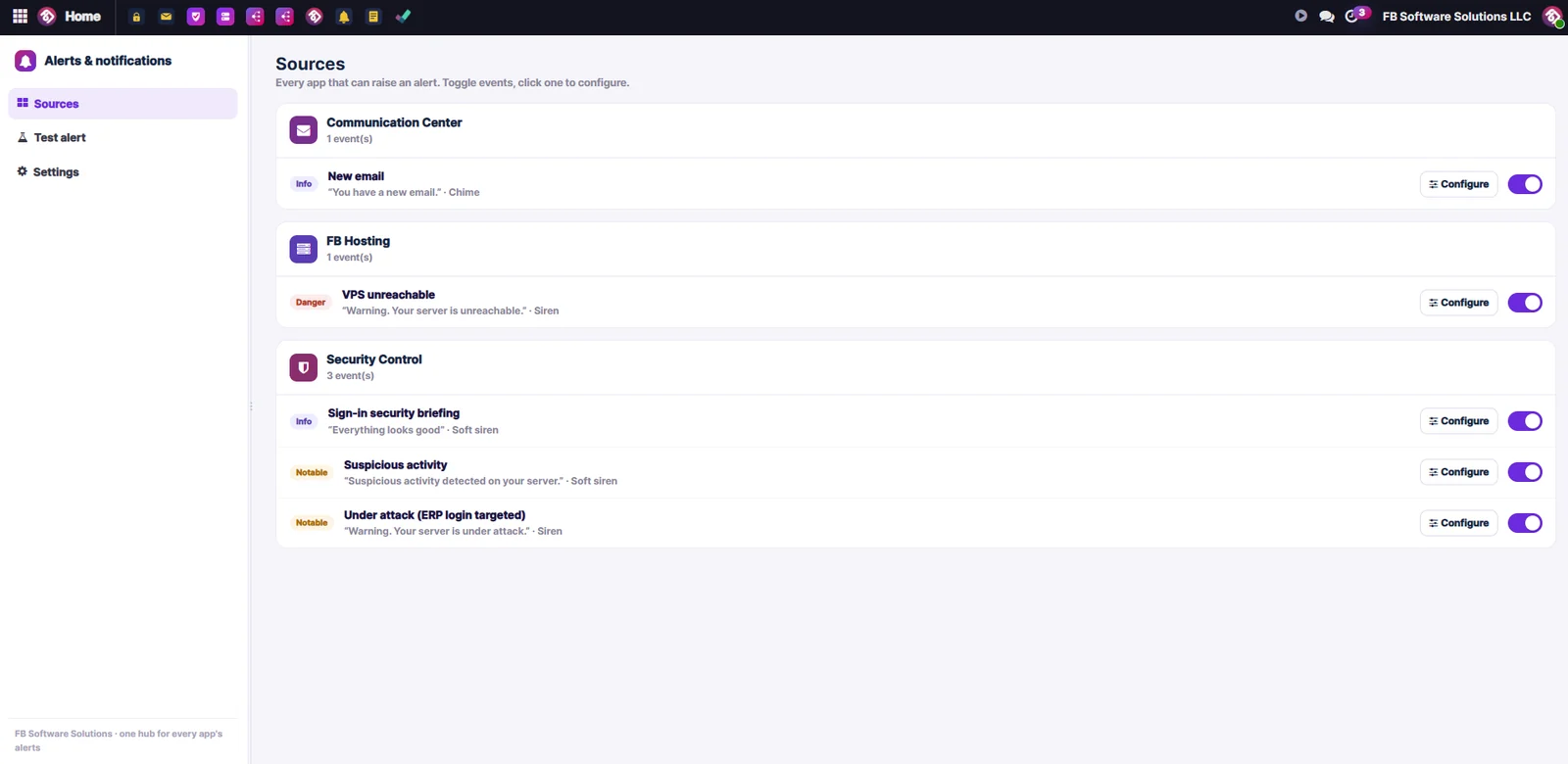
The things that must not be missed — renewals, deadlines, expiries. Every app registers the events it can raise, each with its own severity, spoken message and sound, and a switch to turn it off.
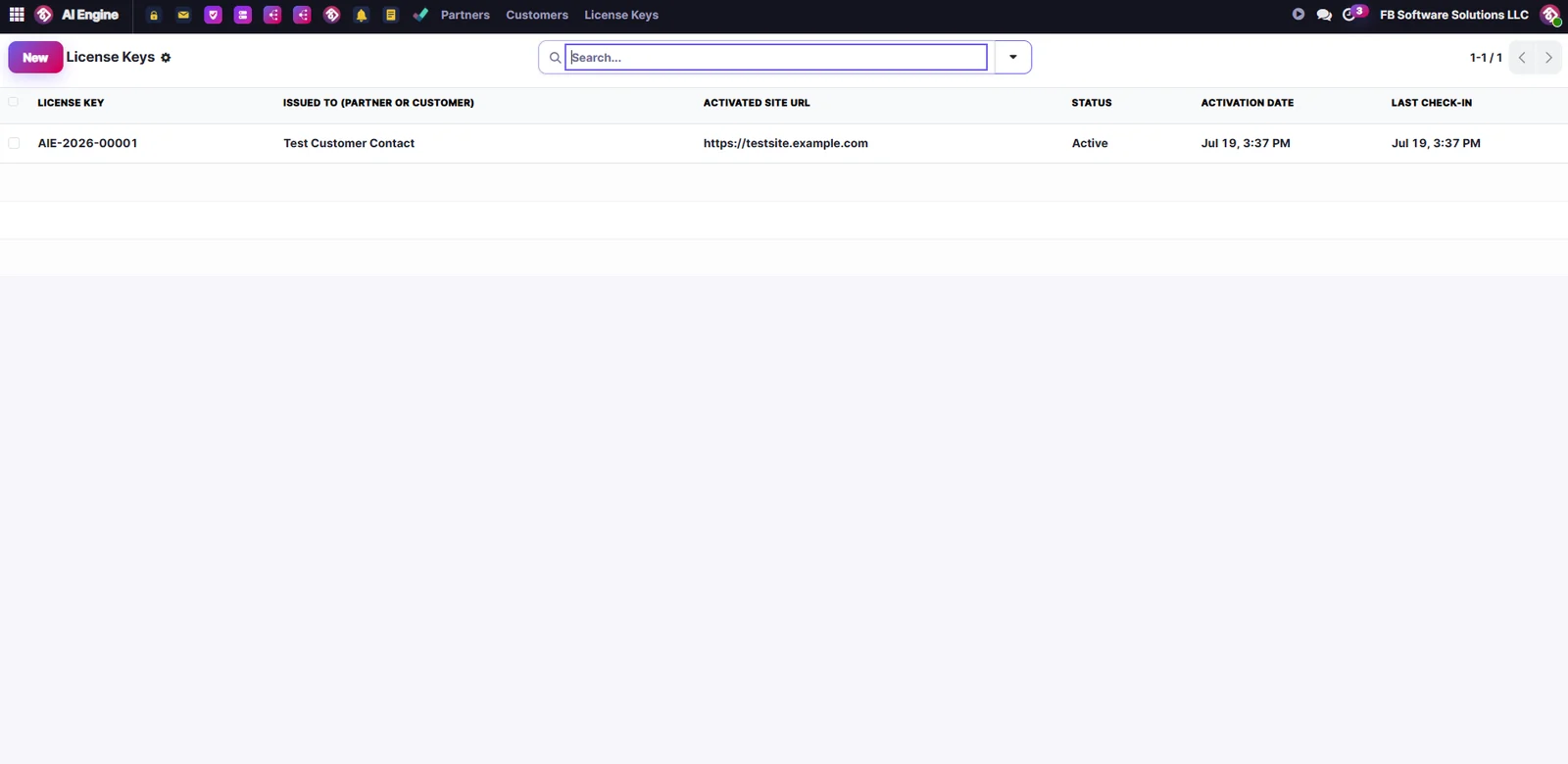
Where the AI Engine's licences will be issued and checked. Keys, the site each one is activated on, and when it last checked in. The row shown is test data — the register works, it is not in commercial use yet.
All eleven
Every app currently installed in the workspace.
Projects
in useWhat is being built, what stage it is at, and what is waiting on someone else.
FB Notes
in useWorking notes attached to the project they belong to, rather than scattered across apps.
FB Mind Maps
in usePlanning a project before writing any code — the step most tutorials skip.
FB Communication Center
in useConversations kept next to the work they concern instead of buried in an inbox.
FB Hosting
in useWhich site lives where, on which account, and when the renewal falls due.
FB Password Vault
in useCredentials held in one controlled place rather than a spreadsheet or a browser.
FB Security Control
in useWho can reach what, and a record of the settings that matter.
FB HTML Site Planner
in usePlanning site structure and sections before anything is built in WordPress.
FB Software Tutorials
in useThe teaching pipeline: what is filmed, what is written, what is published.
FB Alerts & Notifications
in useThe things that must not be missed — renewals, deadlines, expiries.
FB Apps
in useThe launcher that ties the workspace together and gives Serra somewhere to point.
How it is built
Four decisions worth explaining
Odoo Community
The open-source edition, not Enterprise. No per-user licence, and the code can be read and changed.
Our own modules
The FB apps are custom modules written for how this company actually works, not configuration of someone else's.
Self-hosted
It runs on a server we manage. The data does not sit inside a product that can change its terms.
Built in public
The decisions, the mistakes and the rebuilds are documented as they happen, not tidied up afterwards.
Where it is today
Honest about what this is and is not
FB Software ERP is an internal system in active development. It is not a product you can buy, and it is not a finished business suite.
- Customers and CRM
Odoo can do this. We have not built our version of it yet.
not built - Invoicing and finance
Income and expenses are still handled outside the system.
not built - Partner portal
Planned, and it stays behind a Coming Soon label until the security work is done.
not built
“We build it for ourselves first. If it does not survive our own week, it is not ready for anyone else's.”
Why it is not for sale yetRelated
Serra works inside this
The local AI operator being built alongside the ERP
Today she can open the workspace on command. Creating and editing records inside it is the next thing to build, not something that already works.
Watch the ERP being built
The tutorials cover Odoo Community from installation to custom modules — the same path this system took.